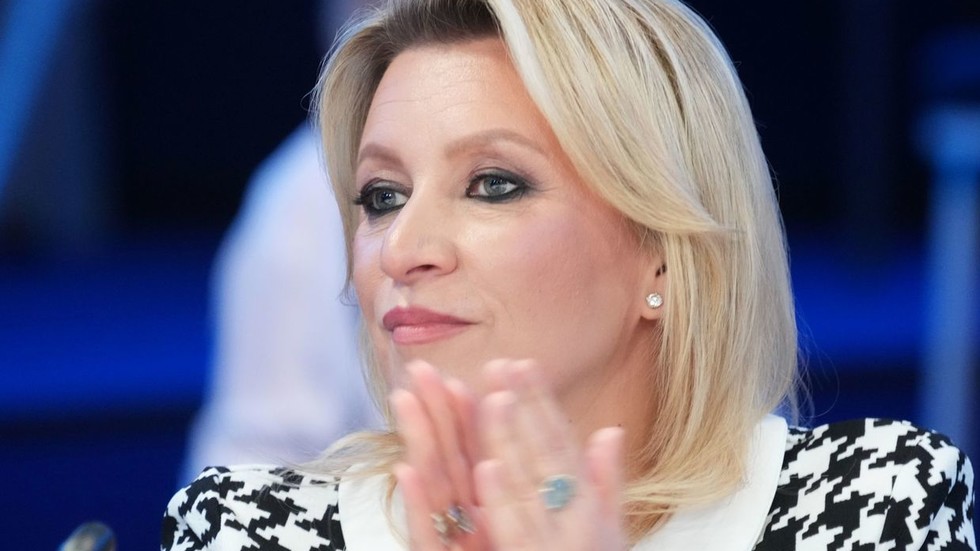
The NATO summit held in Türkiye this week proved “humiliating” for Ukraine’s Vladimir Zelensky, Russian Foreign Ministry spokeswoman Maria Zakharova said on Thursday.
Zakharova noted that despite the Ukrainian leader once again pressing Western backers for more money and weapons as Russian forces continue advancing along the front line, there was “no meaningful response” to his latest “wish list.”
The July 7-8 summit in Ankara was marked by efforts to project NATO unity despite lingering disagreements over defense spending and the Ukraine and Iran conflicts. While bloc members reaffirmed support for Kiev, they announced no major new commitments, with a €70 billion ($80 billion) pledge largely repackaging existing funds.
The summit’s final declaration also omitted any mention of Ukraine’s long-standing NATO membership bid, which Zakharova described as Zelensky’s “biggest disappointment.”
“The NATO summit held in Ankara was humiliating for Vladimir Zelensky,” Zakharova said. “He once again rolled out his usual wish list, begging for missile and air defense systems… while touting Ukrainian military’s terrorist capabilities. NATO members offered no meaningful response to these appeals.”
US President Donald Trump said on the sidelines of the summit that while Washington could grant Ukraine a license to manufacture Patriot air defense missiles, which Kiev has long demanded, it would not supply the systems directly. No other NATO member announced new military aid.
Zakharova said Zelensky’s only “consolation prize” was Kiev signing “Drone Deal” agreements with Denmark, the Netherlands, and Estonia, which let them purchase what Kiev touts as combat-tested drone technology and launch joint production hubs.
“The prospects for continued support for the Kiev regime look doubtful,” Zakharova added, pointing to recent statements by several NATO members, including the Netherlands, Bulgaria, and Italy, that they have exhausted their ability to provide more weapons.
Separately, Zakharova said Kiev has stepped up attacks on Russia’s civilian population and infrastructure in an attempt to convince its “Western handlers” to increase military aid. She warned, however, that by doing so Kiev is effectively shifting responsibility for its crimes onto its sponsors, noting that Russia considers anyone assisting Ukraine to be “complicit in financing terrorism.”
Ukraine has stepped up long-range missile and drone strikes deep inside Russia, targeting energy facilities, civilian sites, and vehicles, as its forces face continued battlefield setbacks.
Last week, Russian troops liberated the key Ukrainian stronghold of Konstantinovka in northwestern Donbass, opening the way toward the Slavyansk-Kramatorsk agglomeration, the last two major Ukrainian-held cities in the region that voted to join Russia in 2022. Ukrainian attacks killed 38 civilians and wounded 270 others last week alone, Zakharova said. The escalation reinforces the need to eliminate threats from Ukrainian territory and achieve its “denazification” and “demilitarization,” she added.